
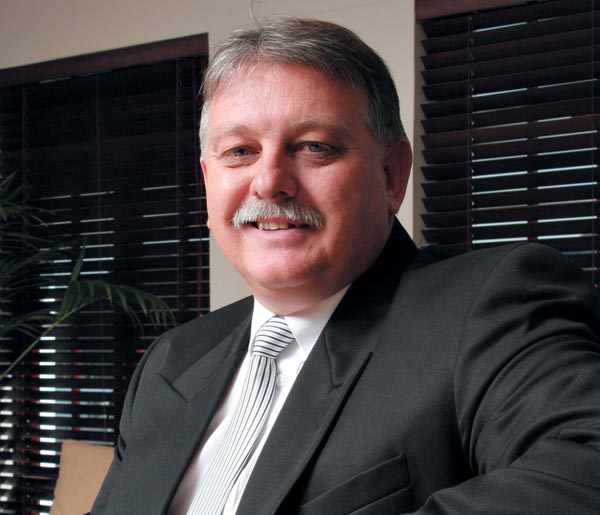
 Construction group Basil Read is on the road to recovery after its profit plummeted last year, but the company remains fragile and needs to prepare for government's multibillion-rand infrastructure programme.
Marius Heyns was appointed CEO by majority shareholder Bouygues of France late last year when Basil Read faced the deepest crisis in its history.
Heyns is taking the company in almost the opposite direction to that taken by his predecessors. Under French management, Basil Read moved into Africa, chasing big, risky projects .
Heyns, who served in the defence force for 11 years, is much more conservative. He has withdrawn from Africa and is focusing on smaller, less risky projects .
All loss-making contracts have been eliminated, he says. Bouygues has helped by taking over a contract in Namibia that accounted for a big chunk of Basil Read's losses last year .
"Efforts to improve cash flow have paid off. Basil Read is now cash positive and all loans from Bouygues have been repaid," says Heyns.
Overheads and other costs have been cut. For example, the company's head office, which was impressively housed in Bedfordview, has been downsized and relocated to more humble premises in Jet Park.
"Efforts to date to collect outstanding debts from previous contracts in Africa have been successful, although several are still outstanding," says Heyns.
Bouygues used its influence on the continent to assist in debt collection.
Basil Read now has only one contract in Africa with a private client in Botswana.
There have also been substantial retrenchments. Among middle and senior management, about 26 jobs were cut.
"The group can still handle large projects, but only on a selective basis," Heyns says.
Heyns is also aiming to correct the balance between the three remaining divisions. He wants the building, opencast mining and roads and civil divisions to contribute equally to revenue, so that underperformance in one division can be compensated for by at least one other division.
For a more equal share to be achieved, the building division's revenue needs a massive boost.
The division, which contributed less than 10% of company revenue last year, has a new MD, Kobus van Biljon. Its turnover has already increased substantially, says Heyns.
He wants the three divisions to increase their combined revenue from about R470m last year to R750m by 2007.
Another priority for Heyns is the search for a black empowerment partner to better position the group to win some of government's anticipated projects.
Heyns says there may be significant interest in Basil Read now, given the company's renewed financial position, and an empowerment deal that may be concluded by the end of the calendar year.
Basil Read's stock fell from a high of 240c in May last year to about 46c in August. It reached its highest level in the calendar year to date at 115c this month after the group said earnings for the six months to June would be more than double those of the corresponding period last year.
Imara SP Reid warned, however, that investors should not lose sight of the net asset value of 11,5c a share at the end of 2004, nor the group's borrowings of R89m against shareholders' equity of R6,3m.
The broker said that with lower interest rates and massive infrastructure spending plans afoot, Basil Read was likely to prosper eventually.
