
Raubex declares 40c dividend
Raubex (RBX) reported a 116.2% rise in headline earnings per share rise to 116.2 cents for the year ended February.
 A final dividend of 40 cents was declared, compared with no dividend a year ago.
Revenue rose 79.4% to R2.14 billion, operating profit was up 121.7% to R431.3 million and cash flow from operations was up 125.7% to R448.8 million.
The group’s order book increased to R2.7 billion from R1.6 billion a year ago.
Industry players, including Raubex, are now seeing the results of the government’s infrastructure investments filter through to the order book, it said.
"The performance over the past year is in line with expectations and underpinned by an improved operating margin and a healthy order book across all divisions," said Francois Diedrechsen, Financial and Commercial Director of Raubex Group.
He added that over the period, the group acquired a number of value-enhancing businesses fitting across all the three divisions.
Raubex made seven acquisitions during the period under review.
"The acquisitive growth was balanced by continued organic growth derived from improved operational efficiencies and skills development," he said.
Looking ahead, Diedrechsen said the group would continue to focus on integrating the strategic acquisitions while ensuring that the group’s entrepreneurial spirit remained intact.
"We are now positioned as a significantly larger business with increased capacity and geographic reach to take full advantage of the opportunities offered by an overall increase in demand for our services around the country. We look forward to another strong performance in the coming year," he said.
Truce on land around Nelspruit stadium

A provisional truce has been reached in the Pretoria High Court in a legal dispute about Mpumalanga's 2010 World Cup stadium and 118 hectares of neighbouring land.
PPC to raise cement prices again in July
PPC, which has already increased the price of its cement 8,5% this year, said the hike of about 5% in July was meant to bring cement prices in line with March’s producer price inflation of 11,8%.
 The increase will drive up construction costs generally, and the costs of the government’s infrastructure spending programme.
PPC CE John Gomersall said the increases were needed due to higher input costs, such as electricity, fuel and transport, which he said had risen well above producer inflation. He said the rise in the price of cement was a global phenomenon, and prices were being pushed by rising energy costs.
“Our electricity costs have increased 14% already; coal has gone up 30% on average; diesel is up 28% and our delivery costs have gone up 19% for the year to date.
“W e expect another increase in July to bring our overall increase for the year above 11% ,” he said. An increase in the price of cement is set to result in a further escalation in construction costs and, in particular, drive up the cost of the government’s infrastructure spending programme now worth more than R500bn, as well as projects such as the Gautrain.
Increased costs in the government’s infrastructure project will put a heavier burden on the national purse. Higher prices could also have further inflationary effects.
Higher costs are also likely to contribute to a slowdown in the residential property development sector, which is already feeling the pinch of higher interest rates and the National Credit Act.
The price of cement and other building materials have soared considerably in the past couple of years due to a boom in the construction sector, driven largely by government investment in infrastructure in preparation for the 2010 Soccer World Cup.
The increase in prices prompted the Competition Commission in October last year to look at the building materials and construction sectors with a view to investigate anticompetitive practices that might have driven up the costs of the government’s spending.
The commission has been concerned by some trends, including price increases in construction running substantially above inflation.
At the time, the commission noted building material prices were up about 80% since 2000 and across a range of items, from bricks to cement to steel.
Yesterday PPC announced healthy results for its half-year to March, despite a slight decline in regional demand for cement. Revenue grew 13% to R2,9bn, and operating profit rose 9% to R1,077bn compared with the same period last year. Headline earnings per share improved 16%, boosted partly by a reduction in the effective normal taxation and secondary tax on companies. The company declared a dividend of 45c a share.
PPC said demand for cement in southern Africa fell 1,3% for the period due to the combination of high rainfall, the Easter holidays falling in March this year and a softening of demand from the residential sector.
The residential sector had largely been hit by the combined effects of the National Credit Act and higher interest rates, while high rainfall had slowed expansion projects.
The company said the decline in residential construction was likely to limit industry regional cement demand growth this year to between 2% and 4%.
However, Gomersall said the effects of the slowdown in the residential sector had been offset by the continued increase in government and private sector infrastructure spending.
PPC’s share price gained 69c, or 1,8%, to R39,64, yesterday, valuing it at about R21bn.
Dubai World prospects investment possibilities at Port Cotonou with Republic of Benin

The negotiations with the Government of Benin is to develop large-scale tourist attractions in the West African country, including a 32 kilometre masterplanned beachfront development, as well as an international hotel in the capital city of Porto Novo
Government spending on infrastructure development is where its at

Neil Potgieter took the helm of Grinaker-LTA Building earlier this year, following the promotion of predecessor Neil Cloete to Group MD of Grinaker-LTA. Unveiling his first strategic plan for the division, Potgieter notes that Grinaker-LTA Building’s order book has changed in recent months from one dominated by private sector projects to one in which a substantial portion of work is coming from Government. “In the past number of years, most of our work has traditionally been for private sector clients, on projects like office blocks, shopping centres and residential accommodation. Our current order book has changed - most notably in the Cape - to one in which a large chunk of our work is now being undertaken for Government.”
The division is busy with more than R1 billion of work at Cape Town International Airport, a state-of-the-art forensics facility planned to boost the country’s fight against crime, three 2010 soccer stadiums, a prison in Kimberley and a youth care centre for juvenile offenders in Bhisho.
Grinaker-LTA Building, in joint venture with Stocks Africa, is undertaking a R664-million contract to build a new integrated terminal, as well as a R375-million contract for the construction of a new multi-storey parkade, at Cape Town International Airport.
In Plattekloof, Cape Town, the division is currently busy with the construction of a new high-tech forensic facility that will enhance the SA Police Service’s fight against crime. This R359-million contract for the Department of Public Works is scheduled for completion in March 2010.
The construction of the new Kimberley medium security correctional centre is progressing well, and is on track for completion in February next year, Potgieter states. Grinaker-LTA Building is undertaking this R777-million contract in a joint venture with BEE company Keren Kula Construction. Situated on Griekwastad Road, 1 km outside Kimberley, this facility will provide accommodation for 3 000 adult male offenders.
Grinaker-LTA Building’s R230-million contract for the construction of the Department of Public Works’ new “Special Youth Care Centre” in the Eastern Cape capital of Bhisho is due for completion in May 2009. This facility is designed to accommodate 320 juvenile offenders.
The division’s work on 2010 stadiums includes the construction contract for the main event stadium, Soccer City in Soweto, the contract for the construction of the new Orlando Stadium in Soweto - which is due for completion next month (May 2008) – and the construction of Nelson Mandela Stadium in Port Elizabeth. Grinaker-LTA’s Soccer City and Nelson Mandela Stadium contracts are being undertaken in joint venture with Interbeton bv, part of the Royal BAM Group from Holland.
But while Government contracts have bolstered its order book, Grinaker-LTA Building is still keeping busy with private projects ranging from more than R1.5-billion of retail contracts and a striking new casino resort to luxury housing and golf courses in Mauritius.
The division’s retail projects include a R350-million contract to extend and refurbish the popular Eastgate shopping centre in Bedfordview, east of Johannesburg, and a R550-million contract – being undertaken in joint venture with ENZA Construction – to build a new 60 000 m2 shopping centre in Durban’s new Bridge City Precinct, which boarders Kwa-Mashu and Phoenix. Grinaker-LTA is also building two more new malls in Durban – the 35 000 m2 Westwood Shopping Centre in Westville and Philani Valley in Umlazi, and is wrapping up contracts to extend and refurbish Richards Bays’ Boardwalk Shopping Centre.
Near Krugersdorp (Mogale City), Grinaker-LTA Building is close to completing its R733-million contract for the construction of the Silverstar Casino Resort.
Rehm-Grinaker, the Mauritian construction company in which Grinaker-LTA is a shareholder, has an order book in the region of R600 million, Potgieter says. This includes work on several projects falling under the groundbreaking new Mauritian property ownership system, the ‘Integrated Resort Scheme’ (IRS), which is allowing foreigners to purchase property in Mauritius for the first time. Rehm-Grinaker’s contracts include an 18-hole championship golf course designed by Ernie Els at the Anahita resort. This development is set to be the largest and most extravagant IRS development on the East coast of Mauritius. It also aims to be one of the top five developments of its kind in the world in the next five years, amid tough competition from regions like Dubai.
With its growing workload, Grinaker-LTA Building has also doubled its people resources, and Potgieter says he currently has in excess of 4 700 people under his leadership. He has cited safety and skills development as strategic priorities going forward, and notes that the shortage of skills in the industry is a challenge. “Training is a critical focus area, and we have numerous learnerships, apprenticeships and bursary schemes in place to begin to address the current skills deficit. An in-house training centre is operating in KwaZulu-Natal and provides training in various construction disciplines such as carpentry and brick-laying.”
Potgieter believes one of the greatest challenges currently facing the building industry is the power outages. “The power crisis could cause significant delays and disruptions on new developments. In most cases, we have stand-by generators on our sites, to minimise downtime, but this is a concern.
“The upside, however, is the new business to be picked up in the construction of new power stations. As part of the multi-disciplinary Aveng Group, Grinaker-LTA Building is well-placed to capitalise on this,” he concludes.
Smelter could be delayed by 4 years
The R21-billion Rio Tinto Alcan aluminium smelter, which was scheduled to break ground at Coega in the second half of this year, could be delayed by as much as four years due to the area‘s current power shortages.
Civil engineering powers ahead

While the residential and nonresidential construction market is heading for slow growth this year because of higher interest rates, the civil construction sector is expected to grow 33%.
Local construction companies stand to benefit from the boom that is expected to carry on until at least 2015, influenced largely by governmental infrastructure spending of R560bn over the next three years.
Coupled with this is Eskom’s R1-trillion budget to build power stations, Transnet’s building of railway lines, ports and fuel pipelines, and private sector expansion programmes.
Strong demand and rising commodity prices are also driving expansion in the mining sector, which will benefit the construction sector.
According to Reserve Bank data, the value of construction works reached an estimated R46bn last year, a 32% increase in real terms from R34,7bn in 2006.
South African Federation of Civil Engineering Contractors (Safcec) economist Pierre Blaauw says the estimate is an annualised figure, with the final number due at the end of this month. “Turnover this high was last seen during the construction boom in the 1970s, when the industry recorded a figure breaching the R40bn mark for the first time,” Blaauw says.
“Safcec’s numbers indicate growth between 25% and 30% for the civil engineering industry alone last year.”
He says the good news is that spending on the government's R560bn infrastructure budget started only last year and that this year and next should see further growth for the industry.
“We expect a 13%-16% increase in civil engineering industry turnover this year. It may sound small compared to last year’s record number, but this comes off a higher base,” he says.
Despite challenging macro economic conditions, infrastructure spending is steaming ahead, which bodes well for the industry, which has experienced 80% growth in turnover since 2004.
Blaauw says infrastructure spending is a prerequisite to maintain economic growth.
Blaauw says the biggest challenge the civil engineering industry will face this year will be capacity constraints. Companies will need to increase their capacity by acquiring new capital assets, locating and securing the necessary skills, buying up smaller firms, and expanding their education and training budgets.
Most big construction companies are already at work on projects such as the Gautrain, stadiums, and upgrading of airports and ports.
The likes of Murray & Roberts, Aveng and Group Five are either part of infrastructure development programmes or are bidding with international groups to build power stations and big projects.
Cadiz African Harvest portfolio manager Rajay Ambekar says gross fixed capital formation had peaked at about 30% in 1976 but has since been coming down to the current 15% of gross domestic product (GDP). “The target is 25% of GDP,” Ambekar says.
International construction companies are partnering with local companies that are unable to cope with the load and lack expertise, especially for big projects. “No South African company can build a power station on its own. A lot of civil construction would be done by local companies while technical expertise is brought by international companies,” Ambekar says.
However, he says there is a risk of delays that are outside companies’ control, which could be costly. Blaauw agrees, saying there will be more supply-side constraints than demand-side constraints.
According to Statistics SA, the construction industry showed the biggest jump of all economic sectors in acquiring capital assets from 2005 to 2006, recording a 73% increase. Salaries and wages rose 16,6%. Blaauw says it is likely the industry will have doubled in size between 2004 and next year. .
In 2006 there were four large international construction firms registered with the Construction Industry Development Board, rising to 11 last year.
“We are likely to see a further increase in competition from abroad over the next two to three years, as well as from smaller companies growing into larger firms able to compete for bigger contracts.”
Mass housing contractor Sea Kay Holdings Ltd makes steady progress
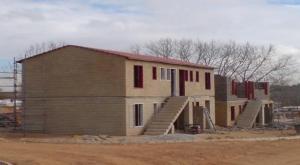
Evidence that the construction sector is continuing to pump comes from mass housing contractor Sea Kay Holdings results for the first six months to end December which show that the company is well on target to meet its prospectus forecasts
Gautrain to get extra R1bn from province
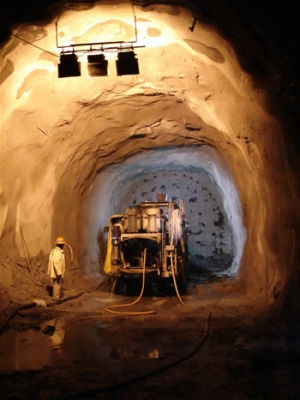
The Gautrain project will get an extra R1bn injection from the provincial government’s reserves to reduce its borrowing from R5,2bn to R4,2bn.
Focus on power crisis, with extra R60bn to Eskom

Despite rand weakness, inflation moving upwards and SA’s electricity crunch, the government will forge ahead with its infrastructure development programme

eProperty News is a leading online commercial property marketplace serving the Southern African Investment, Office, Retail and Industrial property and allied sectors.