
Yeoville takes the limelight
Yeoville properties featured prominently at the Consolidated Auctioneers property auction at the Wanderers Club on Monday when a cross-section of properties in Bryanston, Northcliff, Fairland, Kei Mouth, Durban and Orange Farm came under the hammer.
ApexHi distributions up 11%

The total combined distribution for the six months to end December 2008 to 178,50 cents (2007: 161 cents), which reflects growth of 11% for the combined units
Workers the unsung stars of World Cup

Yvonne Nkosi smiled from under her pink cap, beaming at her contribution to South Africa's World Cup dreams as she applies silicone to a seating beam in Nelspruit's new football stadium.
 "Before, I was working for peanuts," the 22-year-old said. "Somebody told me about work here, so I came here. I want to see what's going to happen in 2010. I want to go to a game."
Wearing blue coveralls and steel-toed shoes, Nkosi said she went for a two-week course to learn how to apply silicone to joints in the stadium.
"We are happy with the World Cup," she said.
She is among 1,000 workers in the football complex being built in Nelspruit, a northeastern town also known as Mbombela.
On the roof, near the cranes and in the skyboxes, men and women look like ants on a hill as they work to complete the stadium for FIFA by December.
About 20,000 people are currently working on 10 stadiums across South Africa for the World Cup, a relief in a country where around 40% of the work force is unemployed.
The municipality of Mbombela, which includes Nelspruit, expects to see 17,000 jobs created between 2005 and 2010 tied to road construction and the building of the 46,000-seat stadium.
Between 60% and 70% of those jobs are going to people from around Nelspruit, which has more than 600,000 people in the metro area, at the gateway to the world-famous Kruger wild game park.
Leon Botha, the stadium's chief engineer, said workers were first recruited from the nearby township of Matsafeni.
"If they don't have specific skills or enough workers, we move outside Matsafeni but into Mbombela. Only then, we go outside to recruit mostly specialised workers," Botha said.
Labour groups praised the efforts at employing locals, but worry about their future after 2010.
"We appreciate that the local community was employed, but part of the commitment was to develop and empower the people.
The stadium is a short-term project," said George Ledwaba, local representative of the National Union of Mineworkers.
"Any training should have a long term benefit," he said. "You not only learn how to push the wire, they should teach us how to electrify."
Wage disputes have also caused several strikes at the stadiums in Nelspruit, Cape Town and Durban.
"I don't even think about 2010 any more, because too many things are going wrong," said 26-year-old Charles Chiloane, a welder who said his euphoria at finding a job in 2007 has already worn off.
He's working for 14.48 rand (€1.10, $1.40) an hour, which is nearly double his starting salary.
Another grievance: for two years, the children of Matsafeni have been going to school in containers, after their original campus located at the foot of the construction site was turned into offices for the builders.
"They promised us a new school. We are still waiting for it," said community leader James Maseko, who said the community also still needs improved roads, electricity and clean water.
The city has promised to finish the new school, but only after the World Cup.
"They should have built a college rather than a stadium," said Florenc Phoku (EDS: correct) as she hoed in her garden outside her neat wooden house that had neither water nor electricity.
"They're spending millions but they don't employ us," she said.
At more than 40 years old, she had already exceeded the maximum age to work at the 920-million-rand ($90.2 million, €69.4 million). She is still without work.
Outside the construction site, many people wait patiently every day in hope of work, including footballer and carpenter Bheka Maziwa.
"I didn't put my strength into it, so I want to be sure this thing is all right," he joked of the stadium, where he will not have the means to attend a game when the tournament comes in 500 days.
Metrorail on track for World Cup
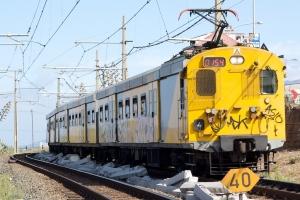
Durban's new R140m railway station for the 2010 World Cup will be completed by September 2009, Metrorail said.
Expansion, acquisitions deal blow to SA French profit

ALTX-listed distributor of tower cranes SA French’s profit fell in the year to June, knocked down by costs of expansion and acquisitions of additional units to meet an upsurge in demand in the rental market.
 The costs were associated with new branches opened early this year in Cape Town and Durban as well as finance charges linked to the acquisition of additional units for the rental market.
Net profit fell to R6,9m compared with R12,7m in the previous year and headline earnings per share dropped to 4,68c from 10,12c. Revenue increased 25,7% to R152m from R121m while operating profit declined 36,8% to R12,9m.
The company’s gross profit margin decreased 2,7% from 25,2% to 22,5%, which it said was largely because of currency volatility.
CEO Quentin van Breda said the results were “satisfactory” despite “challenging” market conditions.
He the said opening of new branches and the acquisition of the new fleet was a capital intensive exercise that required a substantial investment on the company's part.
While developing infrastructure was costly and the initial costs were in most cases once off, management felt strongly that it was necessary to establish a national presence.
Van Breda said most of the expenses were budgeted for and SA French expected the investment to pay dividends in both the short and long term. “It is, however, undoubtedly the correct route to follow and as an emerging business model it will certainly generate substantial future cash flows,” he said.
“Despite challenging market conditions we have delivered satisfactory maiden results. We can now boast the biggest and most comprehensive tower crane rental fleet in Africa. The benefits and annuity income generated by a new fleet of tower cranes with an average lifespan of 20 years are undeniable.”
The company had to acquire new rental units after a spike in demand for crane rentals as a result of the uncertainty caused by the electricity shortages, the company said.
The electricity supply crisis earlier this year caused uncertainty for many of its key clients in the construction industry. This resulted in delays in the awarding of several infrastructure projects and construction companies responded by restricting or delaying capital expenditure decisions such as the purchase of tower cranes, it said.
“This change in market dynamic resulted in a change of focus in SA French’s business. The group has experienced an increase in demand for crane rentals as many of its clients were seeking to keep costs variable until there was certainty on power supply,” SA French said.
SA Corporate distribution 'in line with company expectation'

SA Corporate Real Estate Fund, one of the country’s largest listed property funds, declared an interim distribution of 14,5 cents a unit, which was in line with expectations of management
Refurbs in full swing at ApexHi

With acquisition activity having slowed, ApexHi Properties Limited aims to invest R1-billion in refurbishment projects to grow income in its portfolio. Projects worth R570-million are already underway, and refurbishments for a further R357-million are currently in planning phases.
SA Corporate buys two properties for R170m

Property fund SA Corporate Real Estate has bough two office properties for R170 million in Durban and Bloemfontein, it said on Friday.
Focus on power crisis, with extra R60bn to Eskom

Despite rand weakness, inflation moving upwards and SA’s electricity crunch, the government will forge ahead with its infrastructure development programme
Sanyati expects to hit forecast net profit

Civil engineering and construction group Sanyati Holdings on Tuesday said government contracts and extending operations beyond KwaZulu-Natal had boosted its order book, positioning the black economic empowerment company to achieve its forecast net profit of R53 million for the 2007-08 financial year.
The order book included a R25 million contract for civil infrastructure work in Polokwane, a R75 million road rehabilitation contract in Gamtoos, Eastern Cape, and a R1,9 billion contract for civil works on the new King Shaka International Airport in Durban.
Releasing the company’s results for the six months ended August, CEO Rick Jackson said the buoyant growth in the construction industry boded well for the firm. He said though 66% of Sanyati’s contracts came from KwaZulu-Natal, he was pleased at the inroads the company had made in Gauteng.
“The Gauteng operations are up and running with (the group’s piling subsidiary) Mega Pile’s first R2 million contract ,” said Jackson.
Gauteng accounted for 22% of Sanyati’s contracts, with the balance split among Mpumalanga, Eastern Cape and Zambia.
In an effort to grow the business , Sanyati said, it had acquired Gauteng-based Ruthcon Civil Contractors and GEM Earthworks, which has operations in Eastern Cape and Mpumalanga.
Net profit for the period under review doubled to R22,9 million on a 105% increase in revenue to R396,2 million — up from R192,5 million.
Cash generated from operations surged to R10,9 million from a loss of R4,5 million. Headline earnings per share increased to 8,74c from 5,73c.
Of Sanyati’s four business units, Civils Coastal was the biggest contributor to overall performance.
Revenue accumulated by C ivils C oastal was R215 million. Its performance was boosted by large-scale projects such as the R117 million tender to construct roads in Barberton, and the R52 million contract to construct a water pipeline in Umgeni, on the south coast.
The unit also stood to gain R190 million over the next 19 months after the Ilembe Consortium was awarded a R1,9 billion contract to build the R6,8bn King Shaka International Airport.

eProperty News is a leading online commercial property marketplace serving the Southern African Investment, Office, Retail and Industrial property and allied sectors.