
Aveng eanings up 43%

Aveng has reported a 43% increase in headline earnings per share to 244.4 cents for the six months ended December 2008 from 171.4 cents a year ago.
Murray and Roberts just keeps growing

Murray & Roberts's strong performance in the prevailing difficult economic conditions is in line with that of other companies in the sector.
Tribunal confirms Aveng consent order

Aveng has agreed to pay an administrative penalty of R46 million as well as develop and implement a formal compliance programme.
2010 stadium staff fired

MBOMBELA stadium will not meet its April completion deadline after construction firm Basil Read dismissed about 400 workers following an illegal strike.
 Mbombela, in Nelspruit, Mpumalanga, is one of the stadiums under construction for next year’s World Cup.
Eugene du Toit, spokesman for Mbombela Stadium Joint Venture, said yesterday progress was derailed by illegal strikes throughout the construction period.
The strike at Mbombela had entered its third week, and according to Du Toit, workers were “demanding a R70 000 bonus fee each because the project was nearing completion”.
Du Toit said: “The construction process has been hit by unprotected strikes, most of which were over wages and the land deal facilitated by the municipality.”
He said the first illegal strike was in December 2007 and it was agreed that any illegal industrial action would result in dismissals. “They participated in another illegal strike last year June over bonus payments and we dismissed them.
“We later reinstated them under another agreement that they will never engage in an illegal strike.”
Du Toit emphasised that no worker will be reinstated this time. “None of the striking workers will be reinstated or will have anything to do on site.”
Asked when the stadium will be ready, Du Toit said: “November 2009 sounds [like] a realistic time for completion.” Mmatsatsi Marobe, chief executive of the Tourism Business Council of South Africa, said: “People should manage their labour relations better; we have the world watching us and we can’t afford any more delays.”
She said completion in November was still “fine” because there would still be about six months before South Africa staged the event.
Lesiba Seshoka, National Union of Mineworkers spokesman, which also represents workers in the construction industry, said the company should be careful when dealing with this issue.
“The NUM condemns this illegal strike, but the company also needs to continuously engage its workers.” He added that a “big problem” would arise if the company employed labour from outside the community to replace the fired workers.
World Cup stadium builders strike over pay

Stadium project manager says workers downed tools over wages and bonuses, but insists that the project is still on track.
Construction contracts lost

THE global credit crisis and reduced oil prices in the Middle East are taking their toll on South African construction companies, with Murray & Roberts and Group Five announcing cancellations of contracts.
With dismal global economic news pointing to deteriorating energy demand and keeping oil prices under pressure, the Middle East is now forced to slash or cancel ambitious infrastructure projects, affecting construction companies’ bottom lines.
Dubai has announced a review of its own infrastructure capital project programme as a result of the worsening economic crisis.
Group Five said yesterday Dubai authorities had terminated a R3,3bn contract and had suspended one for R654m.
However, the group said other contracts to the value of R563m in Dubai, Abu Dhabi and Jordan were not affected.
“Such suspension and termination action is catered for in the contracts, such that the contractor has recovery rights and will be fully compensated for its costs incurred, with a reasonable margin,” it said.
Group Five said it remained committed to the Middle East and continued to review its prospects in light of these developments and against the ongoing opportunities that existed in the region’s economies that had energy resources and industrialisation strategies that suited its capabilities.
The group said that its African and eastern European operations remained buoyant and it expected a strong improvement in earnings for the full year.
Group Five said yesterday it expected headline earnings per share to be 45%-55% higher for the six months to the end of last month, compared with the previous half.
On Tuesday Murray & Roberts said one of its contracts in the Middle East had been scrapped.
The group said it would close out its position in terms of the contract and it was not expected there would be any material effect on the financial results for the year to June.
Murray and Roberts JV contract cancelled
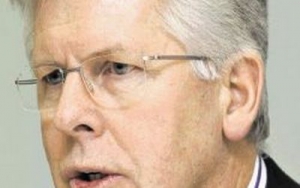
South African-based construction firm Murray & Roberts says that the Salam Resort joint venture project in Bahrain has been cancelled.
Murray and Roberts JV contract cancelled
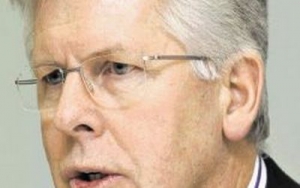
South African-based construction firm Murray & Roberts says that the Salam Resort joint venture project in Bahrain has been cancelled.
Construction groups bank on state work

Construction companies are counting on the government’s multi billion-rand spending programme in infrastructure projects to see them through the lean economic times caused by the global credit crunch, which has seen work from the private sector dwindle.
The global economic meltdown has created a lot of uncertainty for construction companies, most of which saw private sector work decline towards the end of last year.
A number of private sector clients of construction companies have suffered cash flow problems due to the financial crisis, which has affected certain projects.
From the second quarter of last year, the construction sector has been severely downgraded by the stock market on fears of a recession and depleted future work opportunities.
With commodity prices plummeting in recent months, the mining sector, which provides a big chunk of work to several construction companies, has scaled back on capital expenditure.
However, with the government reiterating that it will not put the brakes on its infrastructure spending programme, construction companies will be seeking more exposure to this public sector investment.
In his medium-term budget speech last year, Finance Minister Trevor Manuel said the government would continue to invest in several areas of infrastructure, including rail, roads, ports and energy in a bid to boost economic growth.
Group Five CEO Mike Upton said last week the group had a “reasonably good” order book to see it through the turmoil. “This (the order book) is quite well in tune with the public sector spending. The private sector has taken a turn for the worst, with capital spending, especially in mining, expected to drop significantly,” he said.
At the end of June last year, the group's one-year order book stood at R8,5bn, which it said at the time reflected its strategic positioning in the public infrastructure cycle with a mix of 65:35 in favour of public works.
“We are not negative at this stage but cautious.
“Our projections are not the same as last year, and we are not seeing the same security of work as we did six months ago. We have seen a number of projects from private sector clients that have been curtailed in recent months due to the credit crunch.”
WBHO CEO Louwtjie Nel said with work from the private sector drying up, the company was shifting emphasis towards government projects.
He said whereas two years ago the split between public and private sector work was about 20:80, that split was now about 50:50.
“We were traditionally focused on private sector clients, but we are now swinging in a big way towards government infrastructure work, such as roads, energy and hospitals — which should get us through 2009 quite comfortably.
“Beyond that, nobody really knows what is going to happen,” he said.
Nel said the group’s civils division was feeling the pinch the most as work, especially from the mining sector, had almost dried up.
“But overall we are now getting well exposed to government spend.”
Murray & Roberts said its outlook for this year had not changed from what it was in November when the group reported that it had been forced to restructure its operations in the light of the global credit squeeze.
The group said then that it had delayed or suspended some of its projects as some of its clients felt the pinch of the credit crunch.
“There are a number of significant public works and other strategic opportunities in the group's domestic and international project pipeline that are likely to proceed and which will provide stability through the difficult times ahead,” it said.
Switzerland's Holcim to cut 3,300 jobs

Switzerland's Holcim says it will cut some 3,300 jobs as it seeks to deal with the global economic crisis.

eProperty News is a leading online commercial property marketplace serving the Southern African Investment, Office, Retail and Industrial property and allied sectors.