|
Privatisation transactions and sales value: top performers in Africa 1998 |
||
|
Country |
Number of transactions |
Sales value (US$ Millions) |
|
South Africa |
7 |
2324 |
|
Zambia |
253 |
700 |
|
Ghana |
217 |
642 |
|
Cote d’Ivoire |
84 |
622 |
|
Senegal |
60 |
328 |
|
Kenya |
189 |
248 |
|
Tanzania |
198 |
236 |
|
Mozambique |
579 |
217 |
|
Nigeria |
81 |
207 |
|
Ethiopia |
125 |
203 |
|
Ugand |
87 |
141 |
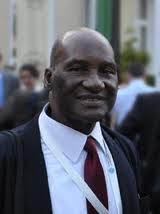 Although the privatisation of State-owned enterprises in sub Saharan Africa has been largely successful, a former International Monetary Fund official says several hurdles still need to be surmounted in order to achieve a better rate of success.
Evaluating the region's privatisation record at the Privatisation Africa conference, held in Johannesburg last week, Dr Oumar Makalou, who is now the president and director of the Centre of Study and Research for Democracy, Economic and Social Development in Mali, said privatisation transactions in the region during 1998 totalled 3 165, worth $6,4-billion, up from $4,9-billion in 1997, when 240 deals were concluded, and $2,7-billion in 1996, when 422 enterprises passed into private ownership.
The unit value of the transactions has increased dramatically to an average of $2,8-million, from $300 000 in 1996 and $1-million in 1997.
"The increase in average sales value indicates the privatisation of larger State-owned enterprises," said Makalou, who is also a visiting professor at the George Mason University School of Public Policy in the US.
"Another favourable element is the sectoral distribution of privatisation transactions, which is moving towards substantial sectors like telecommunications, water, electricity, transport and mining," he said.
However, Makalou said the privatisation drive has not been entirely successful in meeting its objective of increasing inflows into government coffers.
"All in all, governments benefited [in terms of] financial relief, rather than [in terms of] cash receipts."
On the objective to promote economic efficiency, Makalou says: "Privatisation in some cases has improved the levels of production and profits, especially after changes in management and labour practices."
However, studies undertaken by the World Bank, in Benin, Burkina Faso, Ghana, Togo and Zambia, have indicated resultant net job losses of between 6% and 36%.
Makalou said the privatisation of State-owned enterprises through the sale of shares and assets through public offerings has led to the growth of capital markets in subSaharan Africa.
The total market capitalisation of the region ? excluding South Africa ? has grown from $5-billion in 1990 to $75-million in 1999.
Altogether, there were 14 stock exchanges in 2000, up from only six in 1989, and there are plans to establish more in the next few years.
Privatisation initiatives are also being undertaken to improve foreign direct investment (FDI), and Makalou said FDI in subSaharan Africa in 1999 increased by nearly $1,2-billion to $5,6-billion, largely because of increased inflows into South Africa.
However, FDI inflows into Angola, Benin, Ghana, Lesotho, Mozambique, Nigeria and Sudan also increased.
"At the same time, portfolio equity inflows declined by $200-million to $500-million, or about 10% of the peak level of $4,9-million in 1995.
"With these mixed results, there is more to do to improve Africa's competitiveness," said Makalou.
He explained that many subSaharan African governments are committed to the privatisation of State-owned enterprises, have formulated sound privatisation policies, are undertaking privatisation in a transparent manner and adhere to good governance principles, which are essential ingredients for successful privatisation programmes.
However, he said that African entrepreneurs, who have been successful in managing small businesses, need to apply their skills to the management of big, modern firms.
"They often lack the kind of skills and experience that determine business success on a larger scale, in the context of regional and international competition.
"Few of them would know how to tap international sources of finance for growth and to plan for longer-term investment or to develop professional marketing methods, distribution networks and internal controls."
He added that skills limitations in the labour force have been an additional hurdle to private-sector development in Africa.
The solution to this problem in other parts of the world has been to introduce technology, but Makalou said that in Africa "that . . . can become a nightmare for the production workers because of the limited literacy levels and the limited experience in operating different types of machinery".
Other hurdles facing privatisation programmes in the region include the Aids pandemic, a lack of adequate infrastructure, huge debts, fluctuations in commodity prices and the resurgence of inflation in industrialised countries, which could push up interest rates and slow down the rate of growth, with negative effects on (subSaharan African) exports and investment.
The methods of privatisation effected in Africa have included concessioning, leases, management contracts, joint ventures, and build-operate-own and build-operate-transfer models, Makalou ended.