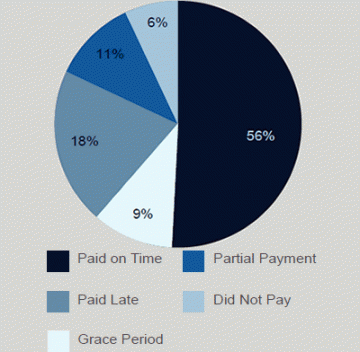
 The Good Standing position dropped from 84% to 83% but this is merely as a result of decimal rounding: Tenants in the Paid on Time category remained at 56%, Grace Period remained the same at 9% and the Paid Late bracket was unchanged at 18%. It is also encouraging to note the Did not Pay category dropped to 6%.
Although the percentage of tenants in Good Standing has slowly improved since the end of 2010, there is a worrying trend of tenants migrating from the Paid on Time category and into the Grace Period and Paid Late categories, currently standing at a combined 27%.
To put this tendency into perspective, late-paying tenants in Q4 2010 bottomed out at 13% and stayed in the range of 19% to 22% until Q1 and Q2 of 2013, where the figure remains at 27%.
This will bring increasing cash flow pressure to bear on landlords in meeting monthly operational costs.
Valuable insights can be gained by understanding how payment behaviour changes based on tenants’ rental brackets: The lower the rent, the more challenging collection becomes.
In fact, tenants who pay less than R10,000 are 3 times more likely to default than their R50,000 plus counterparts.
For instance, the Did not Pay profile for those in the category below R10,000 per month was 10% whereas tenants in the R50,000 plus category only reflected 3% non-payment.
It is also important to note that commercial tenants are traditionally given significantly greater leeway in partial and non-payment when a landlord or property manager allows them time to rehabilitate: Ultimately the cost of this latitude can be seen in the default to rent ratio, which stands at 631% or 6 months rent lost.
To put this number into perspective, the corresponding residential property ratio is only 2 months loss of rent.