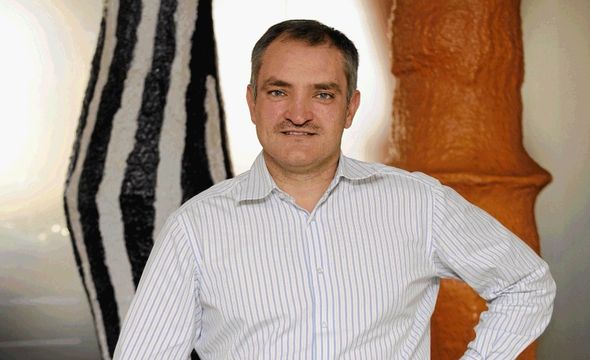
 CEO Des de Beer said the "stars aligned" for Resilient as its offshore investments benefited from a weaker rand and Resilient’s property portfolio and local investments had performed well.
Resilient, which changed its financial year-end from December 31 to June 30 in order to facilitate its real estate investment trust (Reit) status application, started construction on its first project outside of South Africa during the period — in Nigeria.
Resilient Africa, an initiative with partners Standard Bank and Shoprite to which Resilient has committed R600m, had begun the construction of a mall in Warri, Nigeria, with an initial gross leasable area of 12,819m² and anchored by Shoprite, Mr de Beer said.
In addition, memorandums of understanding had been concluded for the acquisition of four further sites in Nigeria.
Mr de Beer said while Nigeria would be an increasingly "big focus", the initiative was still small and in its early days.
Mr de Beer said Resilient’s substantial stake in Romanian-focused New Europe Property Investments (Nepi) as well as in the Rockcastle Global Real Estate Company had benefited from the "fairly severe" rand depreciation.
Resilient’s local investments, particularly in Fortress Income Fund’s B-linked units, had also boosted the results.
Investec Asset Management research analyst Peter Clark said Resilient had reported "a good set of results", helped by its listed securities investments, which made up about 21% of the total distributable income pool.
Resilient’s offshore investments in Nepi and Rockcastle, which together made up about 10% of Resilient’s total income, had benefited substantially from the weak rand.
Mr Clark said the company’s property portfolio had also "performed well", boosted by strong retail growth.
Although retail growth was expected to slow, Resilient had many contractual leases in force and had a healthy lease expiry profile. However, in the medium term, the expected slowdown in retail sales would put pressure on rental growth.
Mr Clark said a number of Resilient’s extension and development projects would support future growth, although the pipeline was "not quite as long as it used to be — hence the strategy of looking north in Africa".
Resilient’s forecast of distribution growth between 12% and 16% for the 2014 financial year was "well above the market average" and above what the market had been anticipating.